

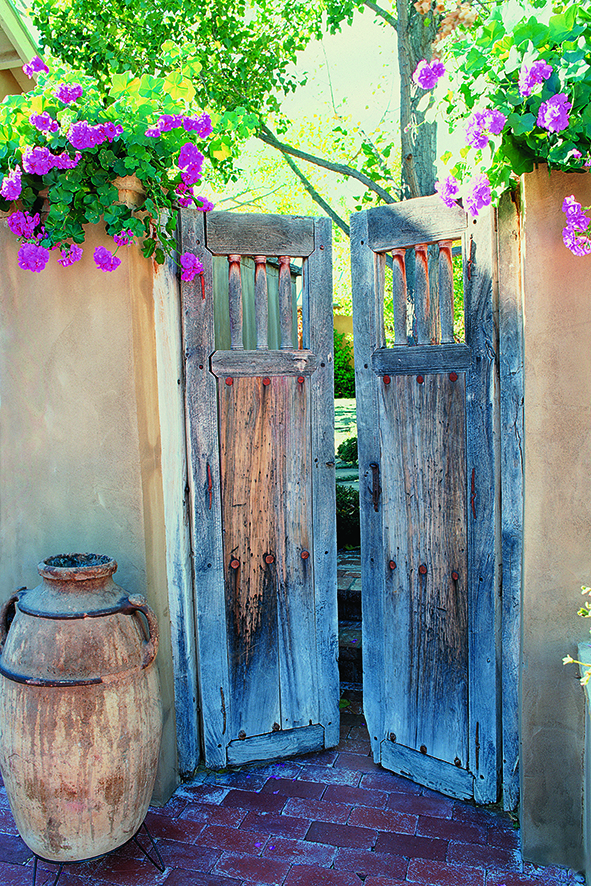
If you’re lucky enough to be in the market for a place in Santa Fe this summer, there are a few things you can do to help make your experience a smooth one. No, this won’t be focused on the “be prepared to act fast” stuff. Rather, we’ll take a look at what you can do to protect yourself from risk. My eight tips for sellers, incidentally, written last March, is here.
- Think Like an Insurer
With climate change as the backdrop, towns and cities all across the American West are dealing with fire risk and its repercussions. P&C insurers, with their penchant for paranoid thinking, have begun intensively rating areas within communities for fire risk, reducing the number of new policies they’ll write in given areas, and raising premiums. Santa Fe is divided into five (I believe) risk zones, with the in-city risk the lowest and the highest up on the mountain. If you’ve found a place, the first thing you ought to do is ask your broker to connect you with insurers who will check out the property, write a good policy, and provide a quote.
- Make Sure Your Broker Uses the Best Title Company
On Santa Fe’s east side, some of the land division dates back to the 16th century and many of the structures to the 18th and 19th. What does this mean as a practical matter? Certain lots, with perfectly lovely modern structures on them, may have been informally divided by families 150 years ago. Making sure your property sits on a legal lot of record is almost always a good idea on the east side. And there are really only two title companies in town that, in my experience, exhibit an extremely high level of professionalism consistently and are worth using. It’s important.
- Inspect The Property Until You’re Blue in The Face
A good general inspection, in Santa Fe, is only a starting place. The importance of knowing as much as possible about a property can’t be overstated. Just on an average property built, let’s say, in the 1930s and remodeled recently: you’ll want a general inspection, you’ll want a couple of roofers to look at the roof unless it’s brand new, you’ll want to scope the sewer line to the house, and you’ll very likely want to have a stucco and/or adobe expert look as the stucco. And this is for a house on city water. Because of how our disclosure system works here, you simply cannot be too careful. You can get huffy with him, but if your broker asks you to spend $1,750 or $2,000 on inspections, he’s looking out for you.
- Understand that Santa Fe is a Relationship Town
If you’re a homeowner here, you’re going to need good relationships with various contractors, your broker, a mortgage banker, etc. Cultivate those relationships, and where possible, go with someone local. Out-of-state banks and mortgage brokers simply do not understand the many quirks of the Santa Fe market. There are perhaps three (all local) lending professionals I’d recommend in Santa Fe, and if a loan is involved, their help is most often vital to reaching a successful closing. An out-of-state banker doesn’t have to look you in the eye when they run into you over in the Railyard, and screwing up your transaction often does not concern them in the least. Yes, I said it. Sometimes they don’t care.
- Pay Close Attention to The Roof
This ought to be in bold print in our sales contracts. The wonderful thing about Pueblo-revival architecture is that our houses are kept low and the landscape isn’t marred by hundreds of pitched roofs. The not-wonderful thing is that flat roofs are finicky and tricky; they have to be maintained regularly, the parapets have to be properly covered and sealed, and any gaps through which water can penetrate must be sealed. Have your general inspector look at the roof and then have a at least two recommended local roofers look at it too; general inspectors aren’t really trained to give a real diagnosis on a roof. Get the photos. Examine them. Make an assessment with your broker. Find out what the problem areas are. Fix them. Don’t mess around with roof-related things.
- Don’t Skip The Stucco
Exterior stucco finishes of various types function beautifully in our dry climate, but they do weather and (in the case of natural adobe) even erode. On a 3,000 square foot house, for example, a full-re-stucco job can be prohibitively expensive and can make a contract fall apart. Pay very close attention to stucco finishes and understand what your investment may have to be to either maintain it properly or bring it into good shape. Work with the stucco people your broker recommends, and not just anyone.
- Slog Through Your Documents
The various documents and paperwork we use in the course of our business in New Mexico are notoriously lengthy and often not well designed. Your broker will most likely understand it well, but in any case, read your purchase agreement carefully and have your broker review it with you in detail so that you know exactly what its provisions are and what your obligations are. It’s best to do this while you are looking at properties and not when you’re under the gun to get an offer in and have it accepted. That way you’ll know what you’re signing and can use your intellectual and emotional energy productively, rather than fret about what you just signed.



Leave a Reply