

Santa Fe probably has more designated historic districts per unit of population than any other city in the country. It does not, however, have more designated historic districts per unit of history! This thanks to the fact that the European era of Santa Fe’s history extends back past 1600 and even arguably to 1540 or so, when Francisco Coronado first passed through the area on his one and only expedition.
I recently stumbled upon the fact that one area, which I have long thought of as the coolest in town, is known as the Camino Del Monte Sol historic district. It’s so named because the street (or footpath, as it once was) takes one in the direction of Sun Mountain, or Monte Sol. Indeed, if you walk south from Canyon Road on Camino Del Monte Sol, Sun Mountain is the first thing you see. It was quite literally the road to Monte Sol.

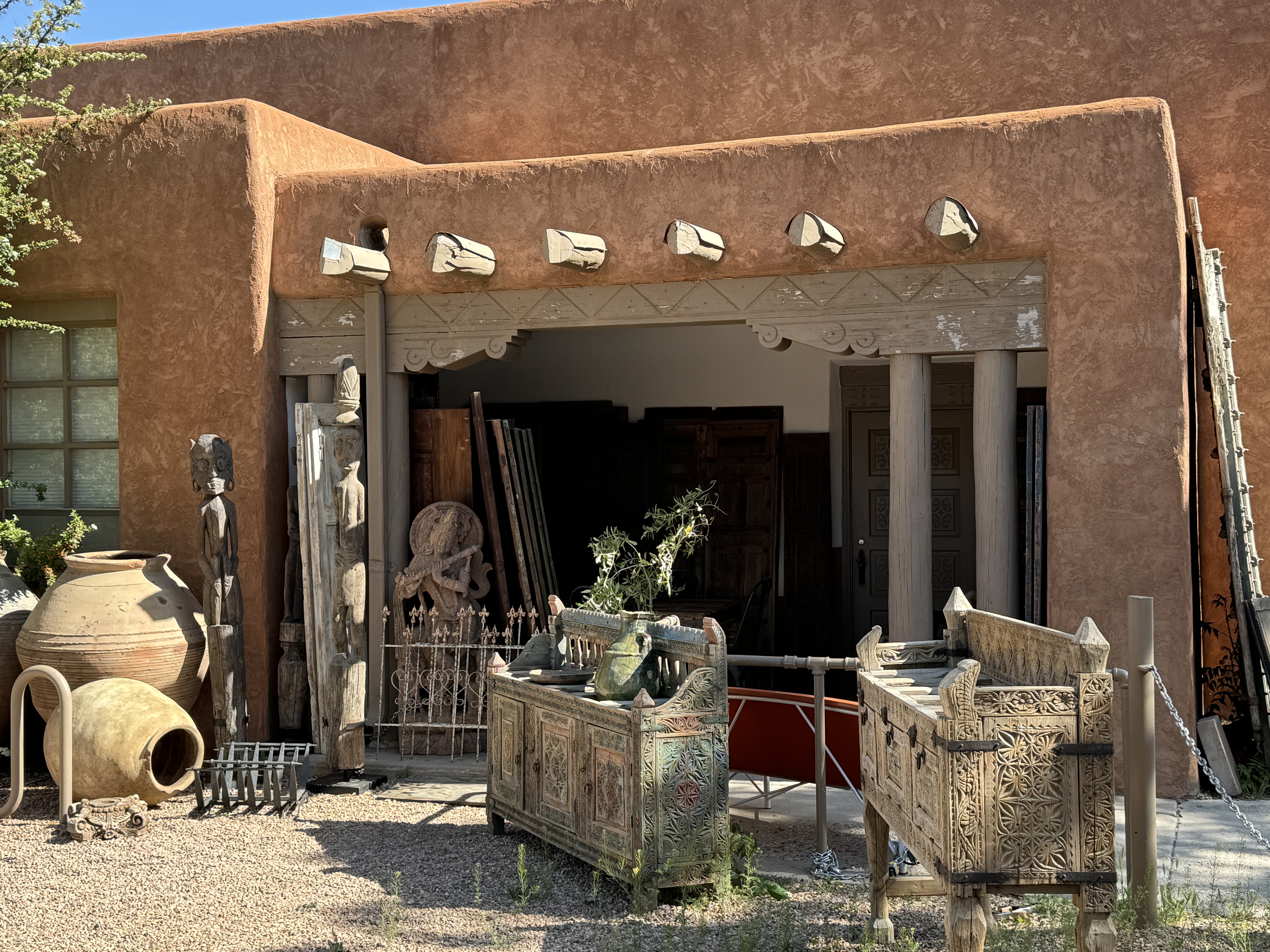
The Firewood yard on Camino Del Monte Sol, just off of Canyon Road
Before there were any artists in Santa Fe, before any galleries, before tourism, before Americans, what we now know as the eastside was farmland occupied by the first Spanish settlers; it was traversed by acequias, many of which still function. The lot lines of those old Spanish farms from the 16th, 17th, 18th, and 19th centuries are what give the Eastside its interesting structure. Land was divided (generally) so that farmers had equal claim to both high and low areas, so one uphill landowner couldn’t deprive downhill neighbors of water. Many of those farms (the cornfields were called milpas) survived into the 20th century, and the dwellings of some of those early Spanish families survived. Thanks to foresight on the part of the city, a portion were preserved due to the 1988 designation of the area as a historic district.

From 1984’s “Camino Del Monte Sol Architectural Historic Survey,” which successfully argued for the later creation of a nationally designated historic preservation district.
Long after the Pueblo Revolt in 1680, long after the Spanish colonial period gave way to Mexico’s more open attitude toward Americans in 1825 or so, long after New Mexico became a territory in 1850, artists from the east coast began to float into New Mexico in pursuit of its dreamy light and a culture that was vastly different from any in the United States, typified by scenes similar to the below.

Boys riding uphill from town, ~ 1920
Camino Del Monte Sol was one of the areas those artists settled. Will Schuster, responsible for so much of today’s culture in Santa Fe (via Zozobra; google it) was among them. As you walk south from Canyon Road, Shuster’s house will be one of the first you see on the right.

Will Shuster’s house on Camino Del Mote Sol
As more and more of the artists who became known as “The Santa Fe Colony” converged upon Monte Sol, they left their imprint via many of the decorated doorways, adapted from the pueblo style, which famously line the road and give it its character.

588 Camino Del Monte Sol
Indeed, they made Canyon Road what it later became. I haven’t learned enough to write in a valuable way about the history, but I am genuinely thankful for the effort that resulted in the 1988 designation and led the area to be so beautifully preserved. If you have not yet strolled up the street from Canyon Road, know that it’s worth doing, and it’ll likely fire your curiosity for what happened here.

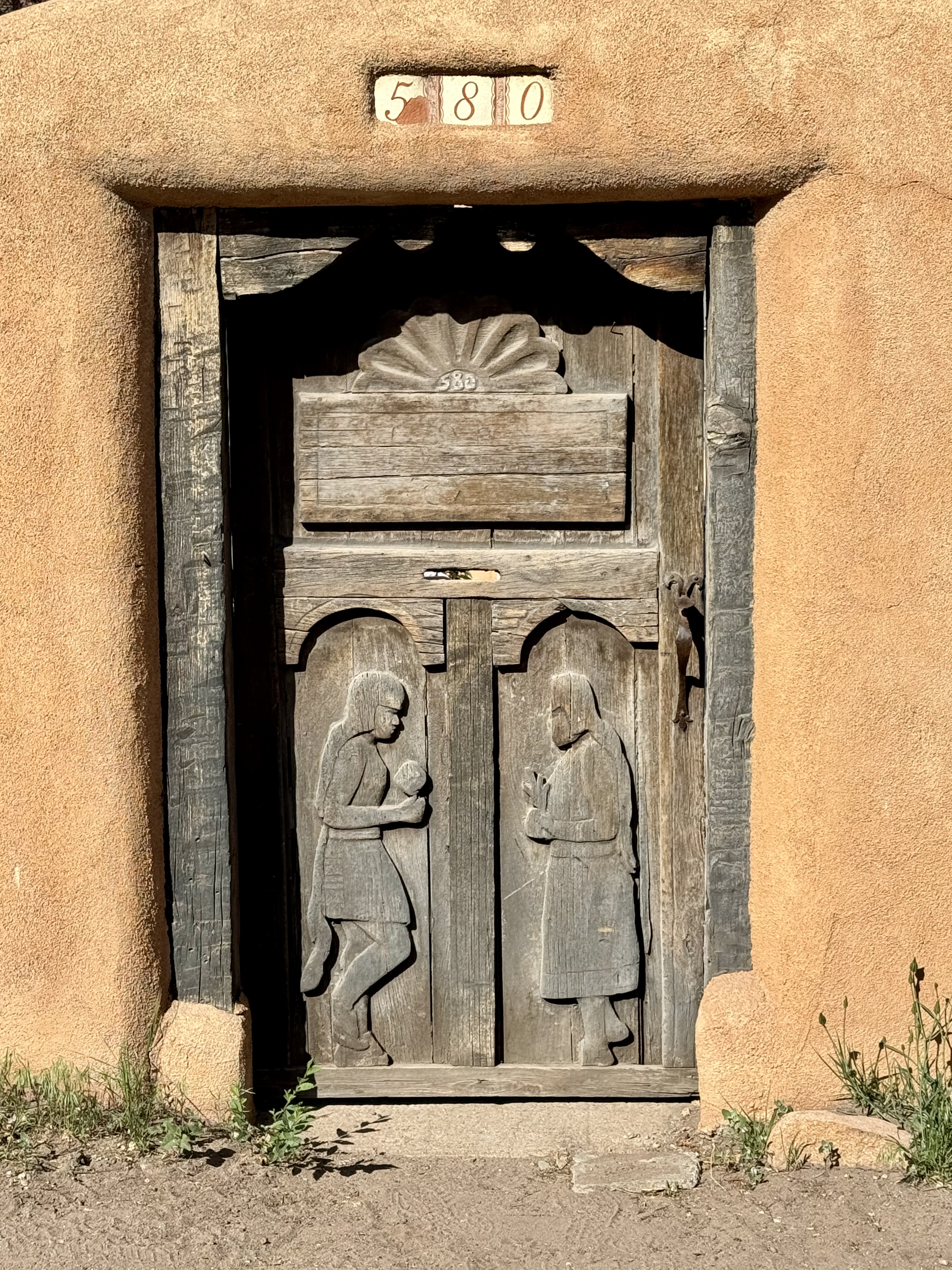
580 Camino Del Monte Sol

Mid-spring on Camino Del Monte Sol

Just outside Santa Kilim, on Acequia Madre
Leave a Reply